M0601C vs M0602C: Torque, Speed and Package Size Compared
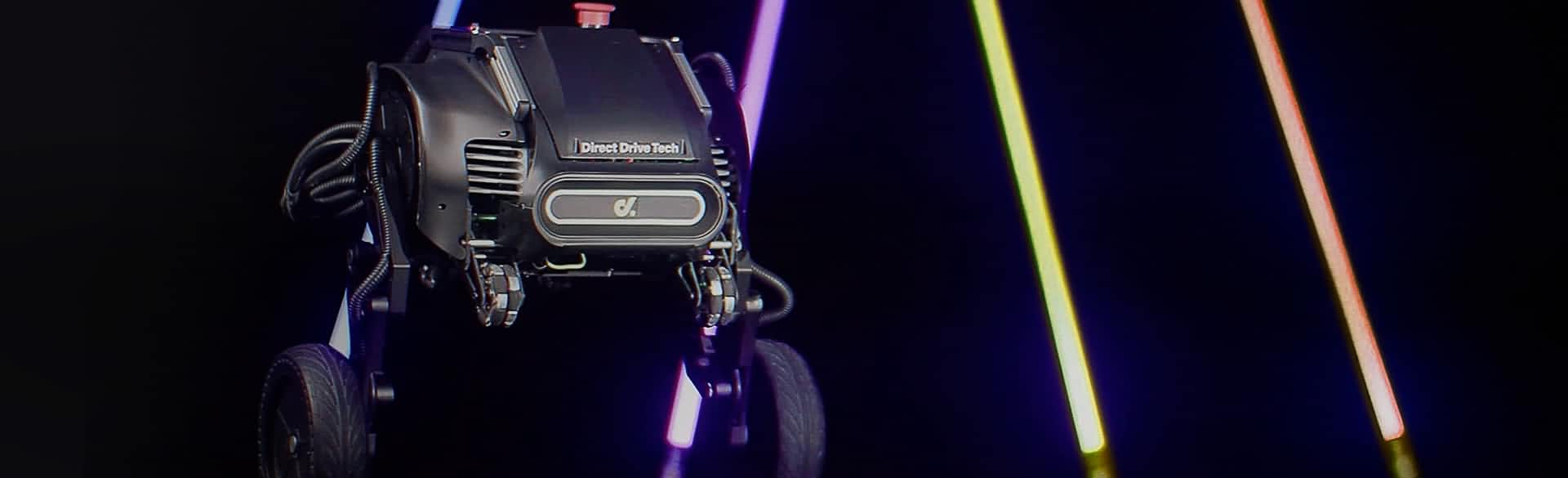
The M0601C and M0602C are designed for different motion requirements. The M0601C focuses on compact size, faster response, and lightweight integration, while the M0602C provides higher torque capacity and stronger continuous load performance. In practical applications, the M0602C can support heavier mechanical loads, while the M0601C fits systems where space and speed are more important. The selection depends on torque demand, operating speed, installation space, and duty cycle rather than a single specification.
Motor selection for compact robotic systems often requires balancing torque output, rotational speed, and mechanical dimensions. The M0601C and M0602C from the M06 series by DDT are built for applications where precision motion and compact actuator design are required.
| Feature | M0601C | M0602C |
|---|---|---|
| Main design goal | Compact actuator integration | Higher torque output |
| Size priority | Smaller package | Larger mechanical structure |
| Motion focus | Fast response and agility | Stable force output |
| Suitable loads | Light to medium mechanical loads | Medium to higher mechanical loads |
| Typical systems | Small robots, precision devices | Robotic joints, automation equipment |
Torque performance is the first difference engineers usually evaluate. Torque determines how much rotational force a motor can provide when moving or holding a mechanical load. The M0602C uses a larger mechanical structure, allowing it to generate higher output torque and maintain performance under heavier loads. In applications requiring repeated lifting, joint rotation, or continuous resistance, the additional torque capacity can improve operational stability.
The M0601C is designed for systems where maximum torque is not the only target. Many compact robotic platforms operate with payloads below 5–10 kg, where reducing motor size can improve overall system design. A smaller actuator can reduce mechanical weight, simplify mounting structures, and allow more flexible component placement.
The difference in torque capability also affects how each motor performs during acceleration. When a robot arm starts moving, the motor must overcome both external load and rotational inertia. A motor with higher torque can reach the target position faster under heavier loads, while a smaller motor can provide quicker response when the moving mass is limited.
“For a lightweight robotic mechanism operating at high frequency, reducing motor size by even 10–20% can simplify the complete mechanical design. For a high-load actuator, additional torque capacity is usually more important than minimizing dimensions.”
Speed performance creates another separation between the two models. The M0601C is suitable for applications that require frequent start-stop cycles and precise positioning. Lower mechanical inertia allows faster changes in rotational speed, which is useful for robotic wrists, compact manipulators, and automated positioning systems.
The M0602C focuses more on maintaining output capability during demanding operations. Larger motors generally have greater thermal capacity because of increased surface area and internal material volume. During long operating periods, this can help maintain consistent performance. For industrial equipment running several hours per day, thermal characteristics can become as important as rated speed.
| Performance Aspect | M0601C Advantage | M0602C Advantage |
|---|---|---|
| Installation space | ✓ | |
| High-speed response | ✓ | |
| Compact robot design | ✓ | |
| Higher torque requirement | ✓ | |
| Longer continuous operation | ✓ | |
| Heavy mechanical loads | ✓ |
Package size influences the complete system architecture. In small robots, every component competes for limited internal space, including batteries, controllers, sensors, and transmission parts. A smaller actuator can reduce the required mounting area and allow manufacturers to create more compact equipment.
The M0602C requires additional space but provides mechanical advantages from its larger structure. Larger dimensions can support stronger components and improve heat management. In applications such as industrial robotic joints or automated machinery, a slightly larger motor may be preferred because reliability during continuous operation is more important than minimizing installation size.
Motor efficiency is also connected with operating conditions. A motor running close to its maximum torque for long periods usually produces more heat and experiences greater mechanical stress. Selecting a motor with sufficient torque margin can improve service life. For example, a system requiring 70% of the available torque capacity generally has more operating flexibility than a system regularly working near 95% capacity.
The application environment determines which specification should receive more attention. A laboratory robot arm used for precise movements may prioritize speed, weight, and compact construction. A production automation system handling repeated mechanical tasks may require stronger torque output and better long-term thermal performance.
“The best motor choice is not always the motor with the highest torque rating. Matching motor size with the actual load range usually produces better efficiency and mechanical balance.”
The M0601C and M0602C can be compared through several engineering parameters:
| Selection Requirement | Better Choice |
|---|---|
| Limited installation area | M0601C |
| Low mechanical weight | M0601C |
| Fast positioning cycles | M0601C |
| Higher payload capacity | M0602C |
| Continuous torque output | M0602C |
| Industrial duty applications | M0602C |
Since their introduction into compact direct-drive motor applications, small actuator designs have continued to improve. By 2025, many robotic systems were moving toward lighter structures, higher integration density, and more precise motion control. Motor manufacturers increasingly focus on improving torque density, where output torque is increased without a similar increase in physical size.
For the M0601C, the advantage comes from efficient use of limited space. It fits systems where engineers need a compact motor without adding unnecessary mechanical volume. For the M0602C, the advantage comes from additional output capability, making it more suitable when mechanical requirements increase.
A practical comparison should consider four parameters together:
| Parameter | M0601C | M0602C |
|---|---|---|
| Torque demand | Moderate | High |
| Speed requirement | High | Medium to high |
| Space limitation | Strong advantage | Requires more space |
| Operating duration | Short to medium cycles | Longer cycles |
The final choice depends on the robot structure, payload, movement frequency, and installation conditions. The M0601C works well when compact dimensions and fast response are important, while the M0602C fits applications requiring stronger mechanical output and longer operating stability.
Selecting between M0601C and M0602C is a matter of matching motor characteristics with system requirements. A compact robot may benefit more from the smaller actuator, while a heavier robotic platform may gain more from the additional torque capacity of the larger model. Both motors provide different solutions for precision motion systems where size, speed, and torque must be balanced.